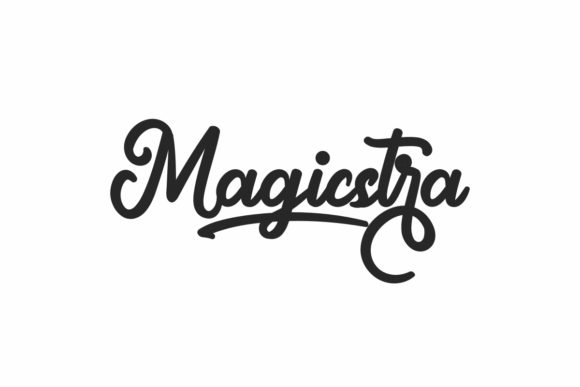
Magicstra: A Handwritten Font for Modern Web Design
I was halfway through a redesign for a boutique lifestyle brand when I hit that familiar wall. The layout was clean, the color palette was soothing, and the user flow made sense, but the hero section felt sterile. It lacked soul. I needed a typeface that could bridge the gap between professional polish and human warmth without sacrificing readability on mobile devices. That is when I started testing Magicstra, a classic handwritten font that quickly became the missing piece in this digital puzzle.
As web designers and UI creators, we often struggle to inject personality into rigid grid systems. We rely heavily on safe, geometric sans serif fonts because they are predictable. But predictability can sometimes blend into the background noise of the internet. Magicstra offers a different approach. It belongs to the Script Amp category of Fonts, designed specifically to bring an organic, hand-crafted feel to digital interfaces. In my recent project, using this font transformed a standard landing page into a memorable brand experience.
Integrating Personality into Digital Layouts
The first thing you notice about Magicstra is its natural rhythm. Unlike some decorative display fonts that feel forced or overly stylized, this typeface mimics the genuine flow of ink on paper. When I dropped it into the headline of the hero section, the contrast against the minimalist body copy was immediate and effective. It did not scream for attention; instead, it invited the user in.
For online store owners and course creators, this distinction is vital. Your website is often the first point of contact with your audience. If you are selling handmade goods, coaching services, or creative courses, your typography needs to reflect the care you put into your product. Magicstra acts as a visual handshake. It signals authenticity. In the context of web design, this helps build trust before the user even reads the first paragraph of your sales copy.
I found that Magicstra worked exceptionally well for short, impactful phrases. Using it for the main value proposition in the header allowed the brand’s voice to shine through. However, I was careful not to overuse it. Handwritten fonts can become difficult to scan if used in long paragraphs. By restricting Magicstra to headers, pull quotes, and call-to-action accents, I maintained a clear visual hierarchy. The eye is drawn to the script elements first, then guided smoothly to the structured information below.
Readability and Responsive Considerations
One of the biggest concerns when choosing a script font for web use is legibility on smaller screens. We know that a significant portion of traffic comes from mobile devices, where screen real estate is limited. During my testing, I paid close attention to how Magicstra rendered on various viewports. Fortunately, the letterforms are distinct and open, which prevents them from blurring together at smaller sizes.
That said, practical UX awareness is key. I avoided using Magicstra for navigation menus or small button labels where quick recognition is essential. Instead, I paired it with a clean, modern sans serif font for all functional text. This combination ensures that while the brand feels artistic and unique, the user experience remains frictionless. The sans serif handles the heavy lifting of information delivery, while Magicstra provides the emotional anchor.
Another technical advantage I appreciated was the PUA encoding. For those unfamiliar, PUA (Private Use Area) encoding allows designers to access special glyphs, swashes, and alternates easily without needing complex coding workarounds. In a real-world project, this means I could quickly swap out a standard "A" for a more decorative variant to balance a specific word in a logo or banner. This level of control is crucial for achieving a custom look without hiring a lettering artist for every asset.
Strategic Font Pairing for Brand Identity
Selecting a premium font is only half the battle; the other half is knowing what to pair it with. Magicstra is versatile, but it thrives in contrast. In my project, I paired it with a neutral grotesque sans serif. This created a contemporary editorial feel that suited the brand’s aesthetic. If you are working on a more traditional or luxury-oriented site, you might consider pairing it with a refined serif font to evoke a sense of heritage and elegance.
For digital product creators and marketers, this flexibility opens up numerous possibilities. You can use Magicstra for social media graphics to maintain consistency across platforms. It works beautifully on Instagram stories or Pinterest pins where visual appeal drives engagement. When used in email headers or course sales pages, it breaks up the monotony of text-heavy layouts, keeping the reader engaged and reducing bounce rates.
It is also worth noting how this font performs over images. Many handwritten fonts get lost against busy backgrounds. Magicstra, however, has enough weight and definition to stand out, especially when used in white against a dark, moody photograph or in a bold color against a light, airy background. This makes it an excellent choice for campaign landing pages where you want the headline to pop immediately.
Practical Applications for Web Projects
Beyond the hero section, I found several other areas where Magicstra added value to the user interface. I used it for section dividers, adding a subtle handwritten line or flourish to separate content blocks. This small detail added a layer of sophistication that standard horizontal rules simply cannot achieve. I also experimented with using it for testimonial headers, giving the customer quotes a more personal, handwritten note feel.
For bloggers and content creators, incorporating this font into blog headers can significantly enhance the editorial quality of the site. It makes the content feel curated and thoughtful. Similarly, for portfolio sites, using Magicstra in project titles can help differentiate your work from competitors who stick to generic system fonts. It signals that you pay attention to the details, which is a trait clients highly value.
Before implementing any new typeface, it is essential to check the licensing terms. Magicstra is available as a commercial font, meaning it is safe to use in client projects, online stores, and branded web content. Always ensure you have the correct webfont files and formats to guarantee fast loading times. Performance is a critical part of UX, and heavy font files can slow down your site, negatively impacting SEO and user retention.
In conclusion, integrating Magicstra into your design toolkit is about more than just aesthetics. It is about creating a connection. In a digital landscape that often feels automated and cold, a well-chosen handwritten font can remind users that there are humans behind the screen. Whether you are designing a coaching website, a boutique online store, or a personal portfolio, Magicstra offers the perfect balance of charm and professionalism. It allows you to craft a brand identity that is not only seen but felt, turning casual visitors into engaged community members.